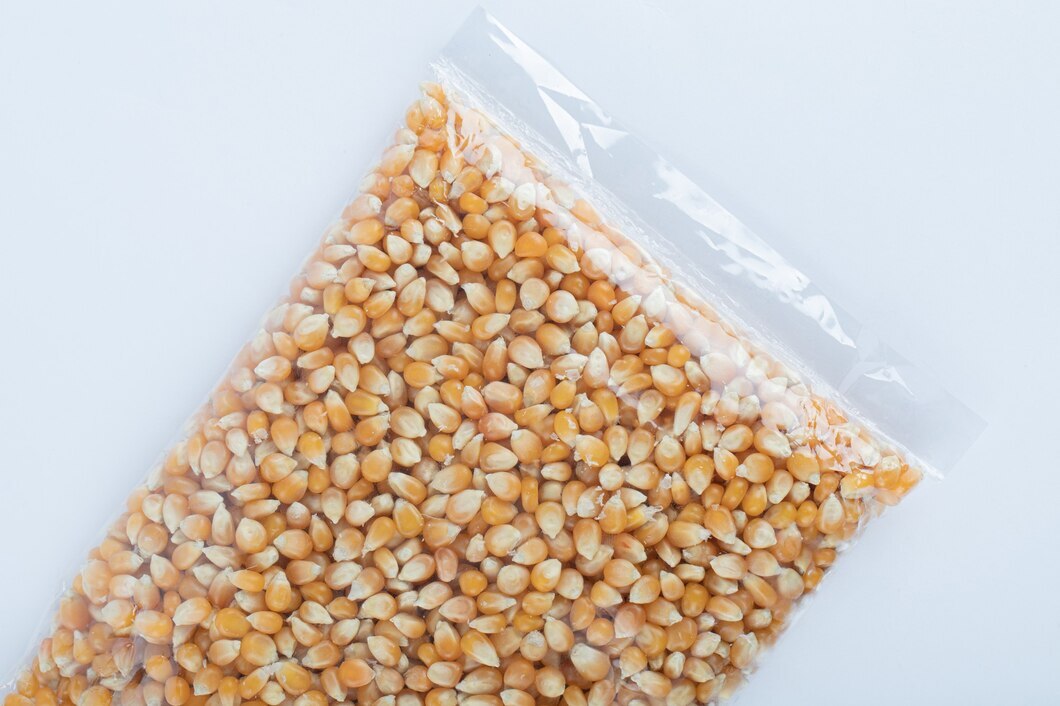
What are the perforations on the bags and what are they for?

Many people have seen perforated bags on the shelves, but not everyone realises just how important this design is for storing goods. Perforation is the only way to ensure that plastic packaging works in harmony with a living, biologically active product. Without these microscopic ventilation channels, the product’s journey from the conveyor belt to the shopper’s basket would be cut short several times over due to simple rotting and condensation. Indeed, it would be cut short several times over, making its sale practically impossible.
Today we will discuss in more detail how perforation helps preserve the condition of products, examine the production technology for this packaging, and look at the main areas of its application.
The physics of the process: why airtight packaging can sometimes be harmful
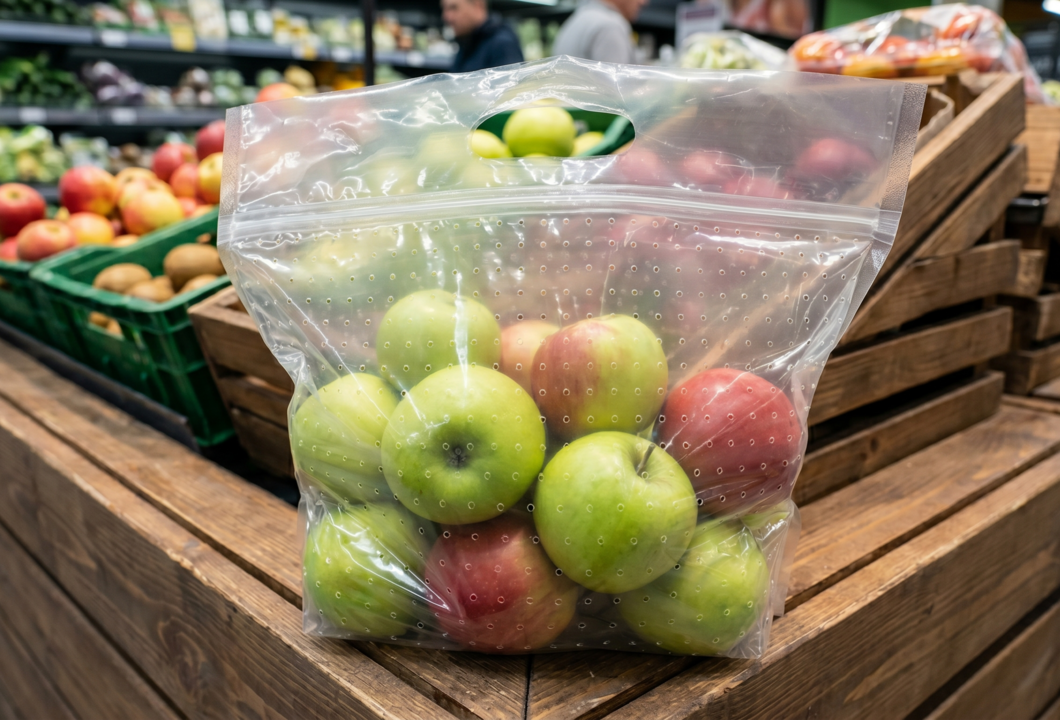
Most of the products we are used to seeing in perforated packaging (fresh bread, vegetables, fruit, mushrooms and herbs) share one characteristic: they continue to ‘breathe’ even after being picked from the garden or taken out of the oven. As part of their metabolic processes or during cooling, they release carbon dioxide, ethylene and, most importantly, water vapour.
If you place such a product in a standard airtight polypropylene bag, a greenhouse effect is created inside. The temperature rises, the moisture has nowhere to go, and it settles on the inside of the film in the form of droplets — condensation. Obviously, this is an ideal environment for the growth of mould and bacteria. In such an environment, bread loses its crisp crust and becomes ‘stale’ within a few hours, whilst greens start to rot at the roots. Perforation, however, allows excess steam to escape, regulating humidity, whilst at the same time protecting food from dust, microbes and dirty hands in the shop. Of course, paper packaging can also be used for this purpose, but it is less practical, less hygienic and, as a rule, more expensive.
Application technologies: from hot needles to pneumatics
In modern production facilities, the perforation technology is integrated directly into the bag production line. Perforation can be applied in two fundamentally different ways, and the choice depends on the diameter of the holes required.
The first method involves the use of perforating rollers (micro-perforation). This is the primary method for working with roll film. The web passes at speed through a system of rollers, one of which is studded with thousands of ultra-fine needles. In this case, the hot micro-perforation method is used. In cold perforation, the needles simply pierce the material, whereas in hot perforation they are heated to a specific temperature. The hot needle does not merely pierce the polypropylene but melts the edges of the hole. The melted edge creates a ‘ring of rigidity’ that prevents the hole from stretching or tearing under load.
The second method involves punching holes. If holes with a diameter of 5, 8 or 10 mm are required, pneumatic hole punches are used. These typically operate when the film stops on the sealing line.
Applications: when perforation saves the day
The main consumer of this type of packaging is the food industry, but it is also indispensable in other industrial sectors.
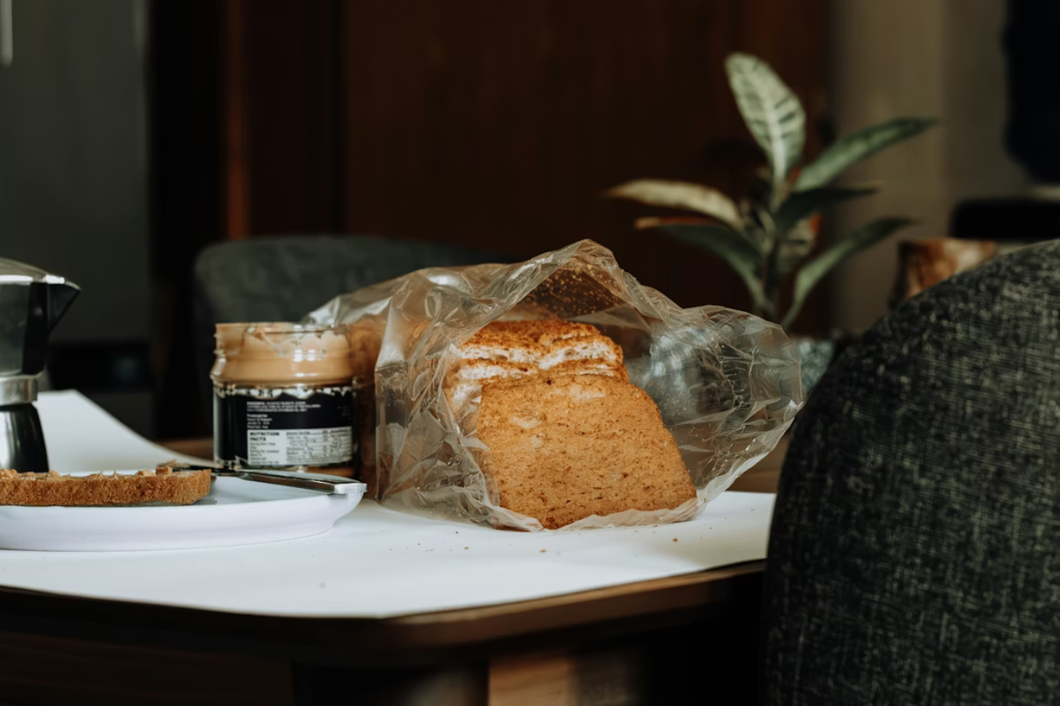
In the bread industry, perforated BOPP film bags have become the standard. Perforation allows bread to be packed whilst still warm, which shortens the production cycle: there is no need to wait for the product to cool (or, in some cases, freeze) on open trays, where dust may settle on it.
For fruit and vegetable producers, perforation is a way to extend the shelf life. Washed potatoes or salad mixes in a perforated bag will stay fresh 2–3 times longer than in a standard one. The customer sees a clean product with no water droplets inside — this inspires confidence.
Perforation can also be used for industrial goods that emit gases or require air to escape during palletising.
Benefits for manufacturers and consumers
To sum up, incorporating perforation into the production process offers several key benefits. These include:
- Preservation of product appearance. The absence of condensation means no mould and the preservation of the product’s correct texture (a crisp crust on bread, the firmness of fresh herbs).
- Transparency. Shoppers choose with their eyes. If the bag is fogged up, they cannot see the quality of the product and are likely to walk past. Perforated polypropylene always remains clear.
- Strength and reliability. This packaging copes excellently with heavy loads: you can be sure that the film will remain intact during packing and transport.
- Cost-effectiveness. Reduced wastage due to product spoilage.
In modern retail, perforated packaging is a sign of a quality approach to the product. It is that little detail that ensures a loaf of bread bought in the morning will still taste good by dinner time, and that vegetables won’t go off in the fridge the next day.