The advantages and disadvantages of using flexible packaging for food products

Today’s food industry is a fierce battle for every customer. Only those who strictly adhere to use-by dates and ensure their products look appealing will come out on top. But, of course, you need to make a profit too! In this context, paper and cardboard are reliable but not the most cost-effective packaging materials, as they significantly increase production costs. This is where flexible packaging comes to the manufacturer’s aid. Bags and various wraps have become the standard, as they allow the product to ‘live’ on the shelf for longer, whilst enabling the manufacturer to spend less. However, there is a flip side to this coin, linked to recycling and the physical limitations of the materials. We will discuss all of this in detail today.
What is modern flexible packaging
The term ‘flexible packaging’ refers to a complex composite material. The base is often polypropylene (BOPP/CPP) or polyethylene, but there may be layers of foil, metallisation or special barrier films in between.
The main difference with this type of packaging is its ability to change shape depending on the contents. It has no rigid frame, allowing it to take up exactly as much space as the product itself. This property has made it the ideal solution for almost any product: from sauces and coffee to frozen ready meals and fresh bread.
Advantages: why retailers choose ‘flexibility’
The shift towards flexible solutions is dictated by tough market logic. In a highly competitive environment, every gram of excess weight translates into losses.
1. A logistics breakthrough and cost savings.
The main advantage of flexible packaging is its weight. A glass jar can weigh as much as the product inside it, whereas the weight of a bag is less than 2–5% of the contents’ weight. For example, a single lorry can carry several times more empty flexible packaging (in rolls) than empty glass bottles or tin cans. This reduces the number of journeys, fuel costs and carbon dioxide emissions. What’s more, empty bags take up minimal space, do not break and do not require special humidity conditions, unlike cardboard, for instance.
Ultimately, reducing logistics costs allows the manufacturer to maintain a competitive price for the product itself, without overpaying for the delivery of ‘air’ and heavy packaging.
2. Barrier properties and extended freshness.
Food products are biologically active substances. Oxygen causes fats to go rancid, whilst moisture turns biscuits into mush. Flexible packaging solves these problems thanks to its multi-layered structure. Layers of aluminium foil or metallised film create a complete barrier against light and gases, whilst vacuum technology and a modified gas atmosphere inside the pack allow fresh meat or cheese to be stored for weeks without preservatives.
This technology makes the packaging a reliable shield, guaranteeing the consumer safety and consistent product flavour months after production.
3. Marketing and design.
Photographic-quality printing can be applied to flexible film. Flexography allows for the reproduction of rich colours and the finest details, which is impossible on a tin without complex lithography. The ability to create transparent ‘windows’ allows the buyer to see the product.
In a situation where the buyer has just 3–5 seconds to choose a product, the visual impact of flexible packaging becomes a decisive factor in making a purchase.
Drawbacks: the other side of the coin
Despite their technological dominance, flexible materials have vulnerabilities that prevent them from completely capturing the market. Let’s discuss them.
1. High cost of errors and the complexity of equipment setup.
Flexible packaging (especially multilayer types, such as PET + polyethylene) requires precise adjustment of the filling lines. The slightest temperature deviation at the sealing jaws — and the packaging seam is either not airtight or burnt right through. As there is currently no mechanism in our country for recycling such composite materials, any production defect becomes an irrecoverable loss. It cannot be remelted and reused in the cycle, as is done with glass or mono-plastic. This forces companies to invest in expensive quality control systems and high-precision automation to minimise the waste rate.
2. Physical fragility and protection against pressure.
Unlike a rigid box or tin, a bag does not protect its contents from mechanical pressure. If you place a packet of crisps under a heavy bottle of water, you’ll be left with crumbs inside. That is why bags containing fragile goods are filled with nitrogen — creating an ‘air cushion’. However, the thin film can be damaged by the sharp edges of the product (for example, dried fish or pasta) or when placed carelessly on a shelf. Therefore, additional outer packaging (such as corrugated boxes) is often required during transport, which partly negates the benefit of the bag’s lightness.
3. Difficulties with high-temperature processing.
Although there are special retort pouches capable of withstanding autoclaving (sterilisation at 120°C), they are significantly more expensive than standard ones. Most types of flexible packaging are not designed for prolonged heating, which limits their use in the production of tinned foods with a long shelf life.
Areas of application: where it is indispensable
Today, flexible packaging is found in almost every section of the supermarket. These include:
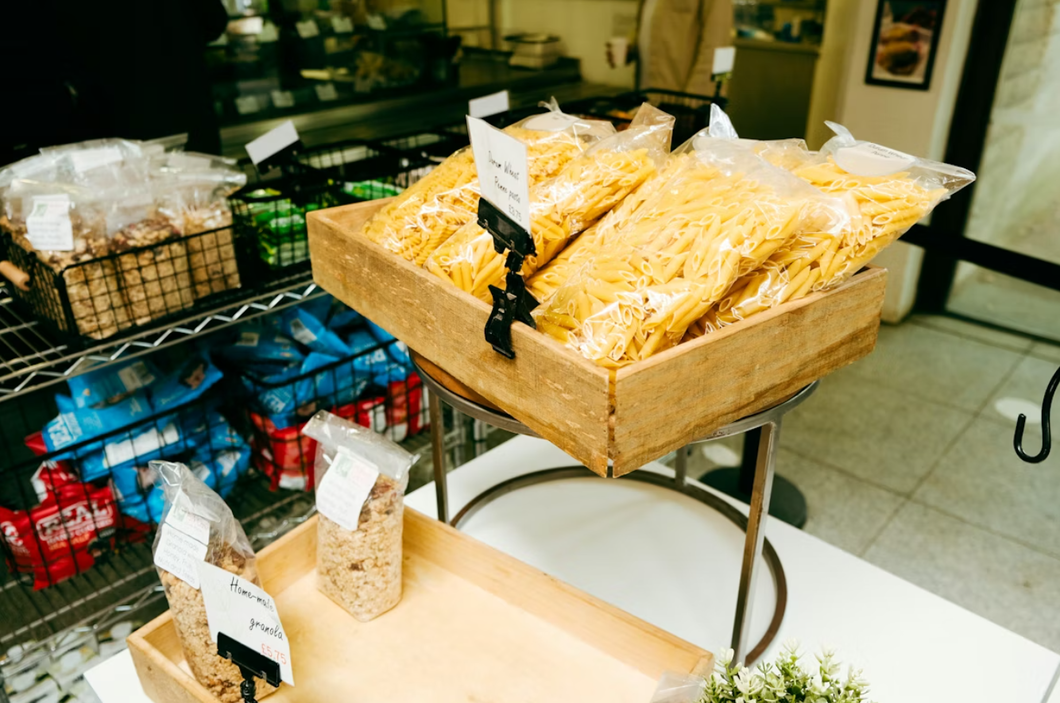
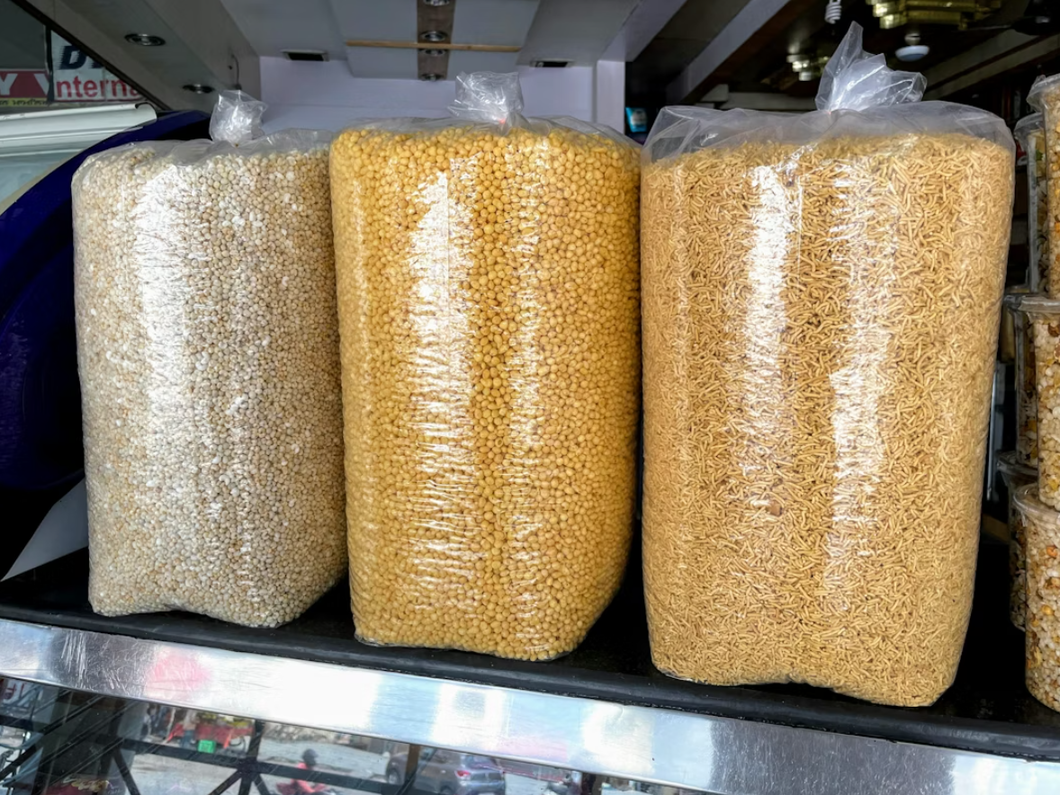
- Groceries: cereals, sugar and pasta in polypropylene bags are a classic example of cost-effectiveness.
- Snacks and confectionery: an important barrier against light and moisture, which is why metallised films are used.
- Dairy and meat products: vacuum bags and heat-sealable films ensure microbiological purity.
- Frozen foods: special films do not stiffen or crack at temperatures of -25°C, protecting semi-finished products from ‘freezer burn’.
The versatility of the technology allows for a customised layer composition to be selected for each specific product, whether it be a liquid sauce or a dry powder.
Flexible packaging is a triumph of engineering that has made food more accessible and safer. Its advantages in logistics and product protection outweigh its drawbacks, but the industry is on the cusp of change. The main challenge in the coming years will be the creation of monomaterials that retain all the barrier properties of polypropylene and foil, yet can be recycled as easily as ordinary paper. However, at present, there is simply no alternative capable of combining marketing, protection and low cost so effectively.